
Building a Creator Operating System for a Class A Influencer
A personal brand at scale is an operations problem wearing a content problem's clothes. Inside the creator operating system Arbaaa built for a Class A founder.
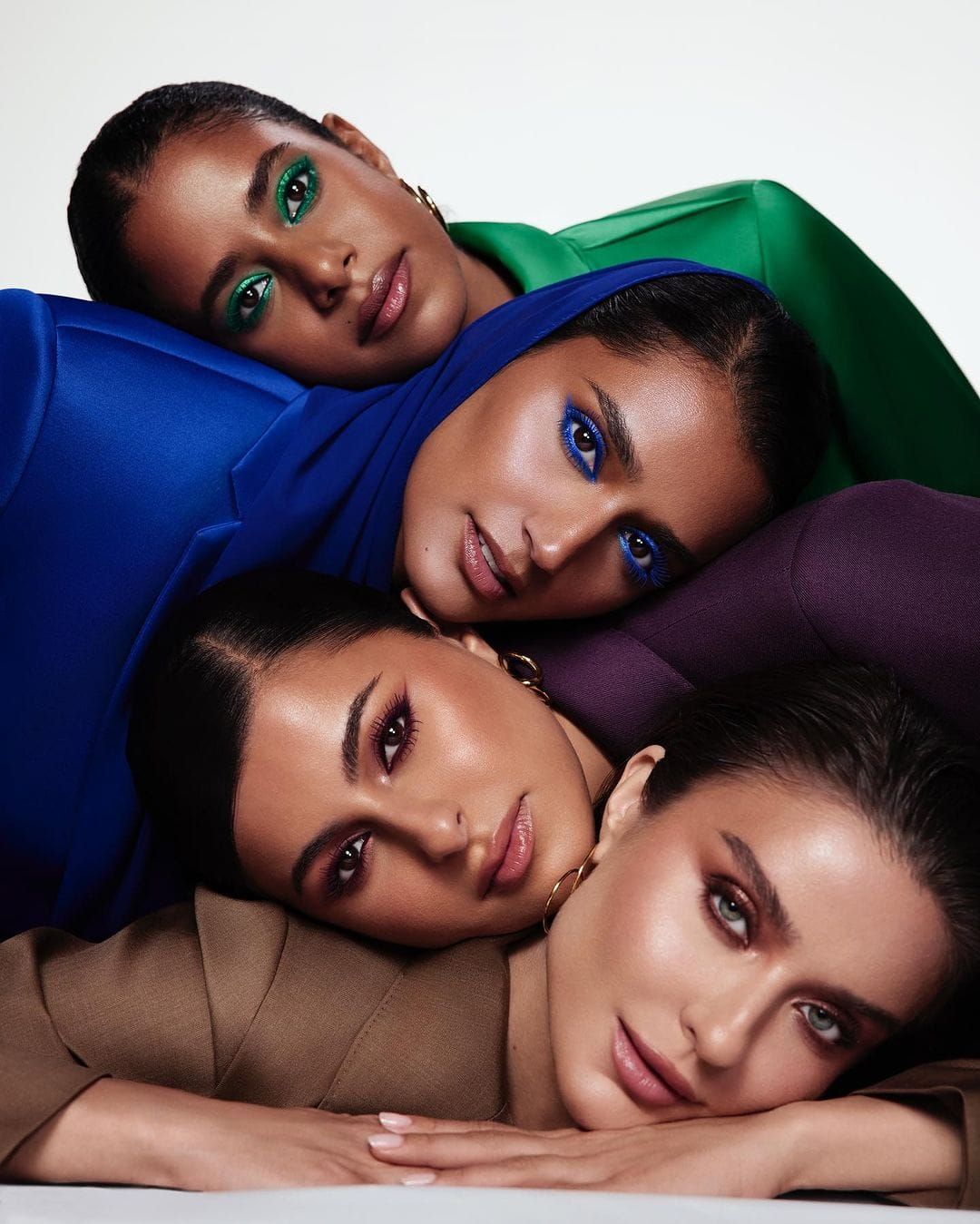
Client Profile
- A Class A beauty influencer and founder. Middle East.
- Multi-million-follower audience across Instagram. Owner of a growing beauty brand.
- Identity, team names, and scale figures withheld at client request.
Executive Summary
The client had already made the hardest transition. She moved from creator to entrepreneur. Her presenting problem was capacity. She was running out of hours. Her real problem was structural. The brand had no engine other than her. Every output required her physical presence. That model does not survive scaling, and it does not survive changes in personal circumstances. She was entering motherhood. Arbaaa was engaged to rebuild how the personal brand operates. We did not optimize the content. We optimized the system producing the content.
The Challenge
1. Creator dependency. Almost every asset required the founder on camera or in the room. This produced authenticity. It also produced a single point of failure. The brand could not move without her.
2. An undifferentiated week. Planning, production, editing, approvals, and publishing all happened in the same stream at the same time. Context switching was constant. Quality varied by accident rather than by intent.
3. Time about to change category. Motherhood does not reduce available hours evenly. It restructures them. Any system built on her flexibility would fail on contact.
4. Unpredictable demand from brands. As a trusted creator, she received urgent campaign requests with short turnaround windows. A rigid system would break under them. A loose system already had.
None of these were in the brief. The brief asked for a content plan.
Discovery
The strategy was built with the operating team, not delivered to it. We ran collaborative mapping workshops with the founder and every person who touches output: personal assistant, content producer, and community manager.
We mapped:
- The production process end to end
- The approval flow and where it stalled
- Actual ownership versus stated ownership
- The brand collaboration intake process
- Personal priorities and non-negotiable time
- The twelve-month vision for the beauty business
The bottleneck was not effort. Every person was working hard. The bottleneck was that no one owned a boundary.
The Reframe
The conventional response to a creator running out of capacity is to produce more efficiently. Batch the filming. Hire an editor. Buy a scheduling tool. This fails because it treats the founder as a production input to be optimized. It makes her cheaper to run. It does not make her replaceable in the tasks where she should be replaceable, or protected in the tasks where she is irreplaceable. We inverted it. The scarce asset is not her time. It is her creative energy. Design the week around energy, and capacity follows. Design it around output, and energy collapses.
The System
The Energy Week
The week was reorganized by creative demand rather than by department. Each day carries one purpose.
Monday. Strategy and flex. Planning, performance review, script approval. Founder-format content at midday. The afternoon is a reserved window, held open by default.
Tuesday. Beauty brand. Product campaigns, tutorials, education, launches. Personal brand production intentionally minimized.
Wednesday. Personal brand production. The primary filming day. Long-form, talking head, lifestyle, evergreen, B-roll. Everything prepared before the camera turns on. Filming capped at four to five hours. The cap is the point.
Thursday. Beauty brand. Campaign execution and partnerships. Heavy personal content avoided.
Friday. Lifestyle and community. Cooking, fashion, family, routine, behind-the-scenes. Designed to demand the least creative energy of the week.
Weekend. Protected. No scheduled filming. Optional stories only, by choice.
The 80/20 Capacity Rule
Only 80% of available production capacity is ever scheduled.
The remaining 20% is held for urgent campaigns, trend windows, reshoots, and PR requests.
Unpredictable demand is not a flaw in a creator business. It is the market. So the flexibility is built into the structure rather than allowed to break it.
Monday's afternoon window is where that 20% lives. Unused, it converts automatically to recovery time. It is never reallocated.
The Tier Gate
Every incoming collaboration is categorised on arrival, before it reaches the founder.
Tier A. Strategic partners. May move the weekly schedule. Major launches, long-term partners, high-value collaborations.
Tier B. Important campaigns. Must fit inside the flex window. No exceptions.
Tier C. Standard collaborations. Scheduled into the normal calendar. No disruption.
The gate is operated by the operations manager, not the founder. That is what makes it a system rather than a preference.
The Ownership Model
Roles were rewritten around boundaries, not tasks.
Founder. Creative director. Owns creative direction, filming, brand voice, final approvals, strategic partnerships. Does not own scheduling, editing, community management, or reporting.
Operations manager. Owns calendar, logistics, shoot coordination, brand scheduling, and recovery time. Primary KPI: protect the founder's time.
Content producer. Owns scripting, production planning, filming, editing, asset library. Primary KPI: raise quality while lowering production stress.
Community and distribution manager. Owns publishing, captions, community, reporting, audience insight. Primary KPI: every published asset reaches its ceiling.
Each KPI is a boundary written as a target. That was deliberate.
The Infrastructure
The full content operation runs through a single Airtable base. Every item carries title, pillar, platform, campaign, owner, status, deadline, approval stage, publish date, and performance data. One source of truth, visible to all four roles.
Metricool runs scheduling, community management, and analytics. Weekly reporting became an operational output rather than a manual task.
Output cadence was set at three to four feed posts weekly, mixed across founder, education, lifestyle, and campaign. Stories daily. Stories carry personality and community without drawing on production capacity.
Success Criteria
The engagement is in its implementation phase. The measures below are the agreed criteria, not observed outcomes. No performance data is claimed at this stage.
Operational. Reduction in production cycle time from brief to publish. Reduction in unplanned requests entering the week. Reduction in approval stalls. Single named owner on every content item.
Brand. Engagement quality over engagement volume, measured by saves and shares rather than views. Publishing consistency against the set cadence. Share of output attributable to founder-positioning content.
Personal. Filming hours per week against the four-to-five-hour cap. Weekend days with zero scheduled work. Flex window converted to recovery rather than consumed.
The personal metrics are not a soft category. They are the leading indicator. If they fail, the others follow within two quarters.
The Shift
Before. She was the engine behind the brand.
After. She is the creative director of a system that runs without her, so she can spend her energy on the work only she can do.
Close
A personal brand at scale is not a content problem. It is an operations problem wearing a content problem's clothes. The founder is never the bottleneck. The absence of boundaries around the founder is the bottleneck. Build the boundaries first. The capacity is already there.
Arbaaa builds the infrastructure behind reputation. Published with client permission. Client identity and scale figures are withheld at the client’s request.