
The Trust Shift: What GCC Marketers Must Do Differently Right Now
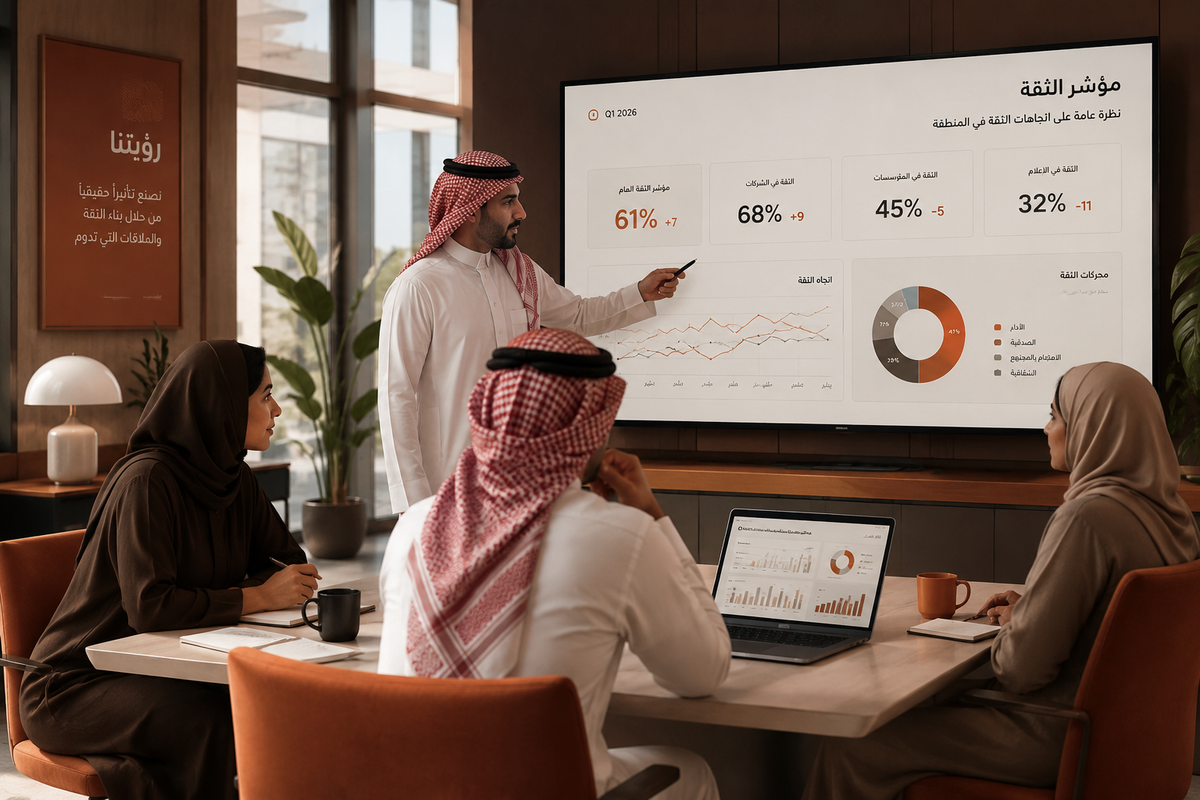
The 2026 Edelman Trust Barometer is not just a report about how consumers feel. It is a description of a world that is fundamentally reorganizing around trust, where it comes from, who holds it, and how it is earned.
A Message to Every Agency Professional in the Region
If you work in marketing, communications, or advertising in the GCC, the 2026 Edelman Trust Barometer should be required reading. Not because it confirms what you already know. But because, in several important ways, it challenges the strategies that many agencies in the region are still relying on.
The world is changing how it trusts. And if our campaigns, strategies, and client recommendations do not change with it, we risk becoming very loud voices that nobody is actually listening to.
This article breaks down the five biggest trust shifts identified in the Edelman report — and translates each one into a clear, practical change that GCC agencies need to make right now.
1. Stop Selling to Audiences. Start Serving Communities.
What the data says:
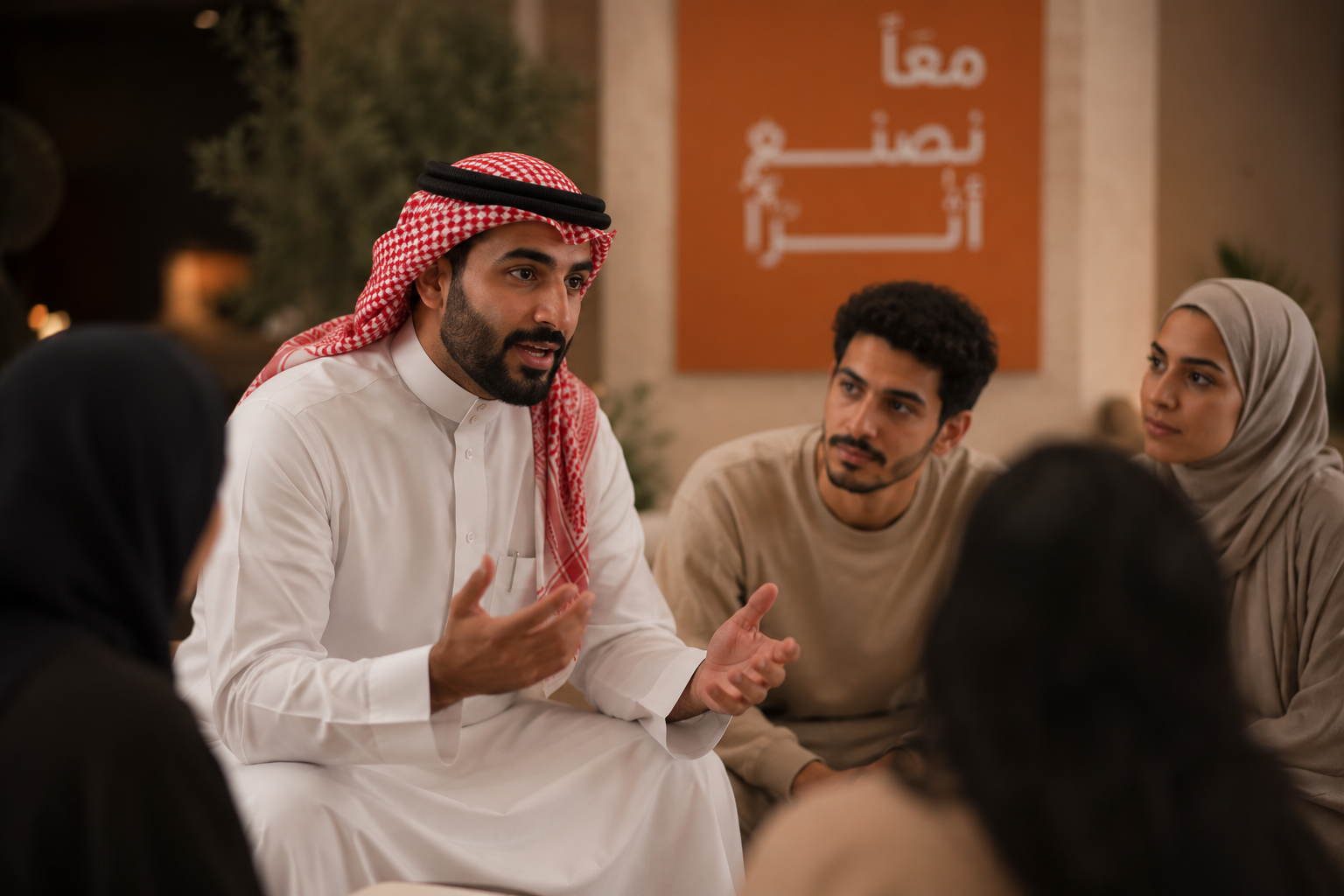
The Barometer found that trust in neighbors, family, and friends grew by a net of +11 points globally, while trust in national government leaders fell by -16 and trust in major news organizations fell by -11. People are no longer looking up to big institutions for guidance. They are looking sideways — to the people around them.
In the GCC specifically, this trend has a unique texture. The region has always had strong community values — family networks, tribal connections, neighborhood loyalty, and a culture of personal recommendation. What the Edelman data shows is that these values are now becoming the dominant force in how people across the world make decisions. The GCC was ahead of this curve. Now the question is whether GCC agencies are using it.
What agencies need to change:
Too many campaigns in the region are still built around broadcasting — a big idea, a famous face, a large media buy, and a hope that the message lands. This model is losing power.
The shift agencies need to make is from audience thinking to community thinking. Instead of asking "who are we talking to?" start asking "what community does this brand genuinely belong to?" and "how can this brand serve that community in a real and lasting way?"
This means recommending longer-term community investment programs over one-off activations. It means designing campaigns that create real local value — not just brand awareness. It means measuring success not just in reach and impressions, but in trust built and relationships formed.
Agencies that make this shift will be able to offer clients something that is genuinely hard to buy: earned credibility within a community.
2. Rethink Your Influencer Strategy — Completely
What the data says:
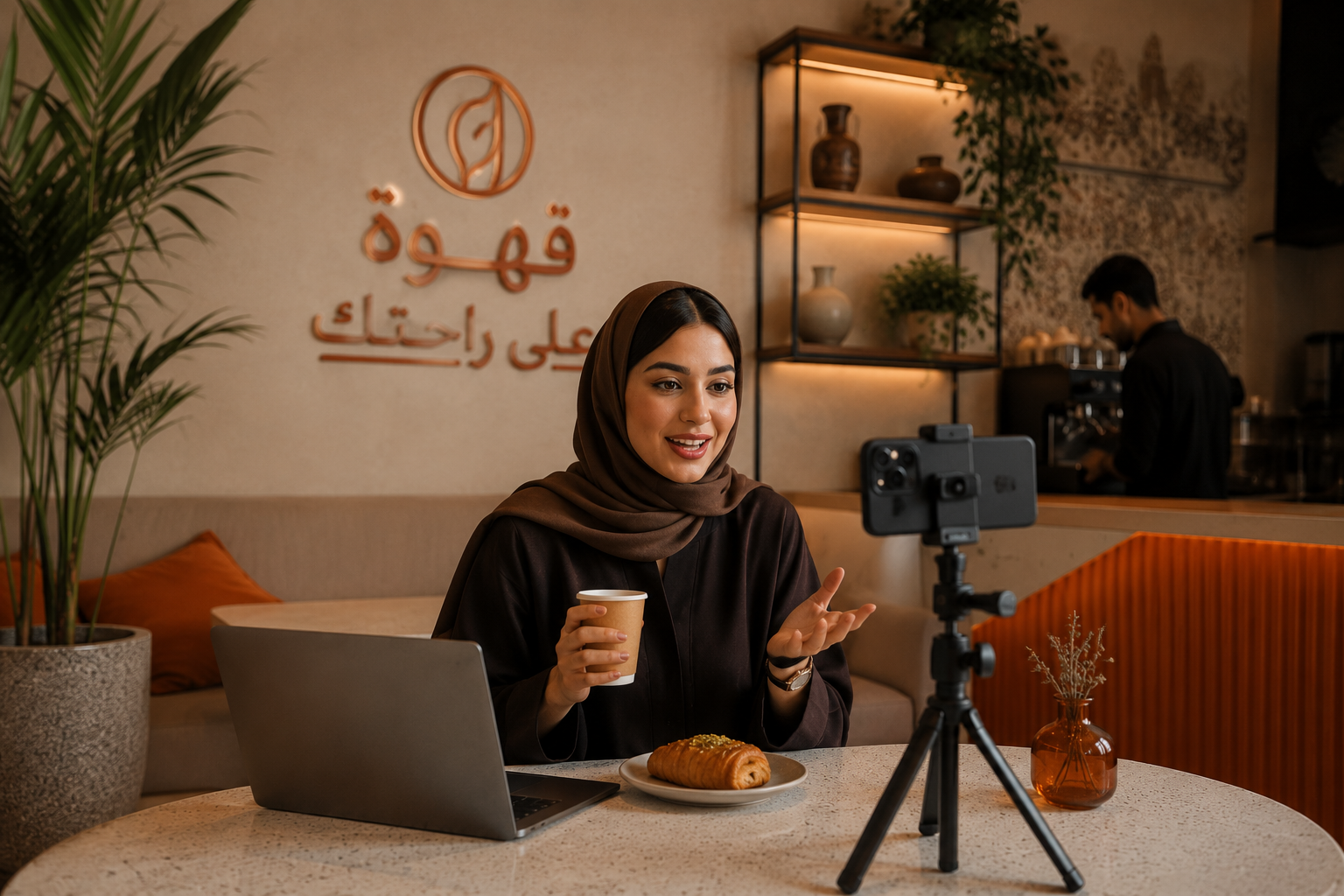
The report confirms that influencers still have power. When a trusted lifestyle influencer recommends a brand, around 62% of their followers would trust or consider trusting that brand. That is a real effect and it has not disappeared.
But the critical word is trusted. And trust, the Barometer shows, is becoming much harder to build at scale. Seventy percent of people globally say they are hesitant or unwilling to trust someone who is different from them in values, background, or beliefs. In a fragmented world, the follower count of an influencer matters far less than the depth of their relationship with their specific community.
In the GCC, the influencer market has grown enormously over the past decade. Saudi Arabia, the UAE, and Kuwait have some of the highest social media engagement rates in the world. But the market is also maturing. Audiences are becoming more sophisticated. They can identify paid promotion. They are more selective about who they genuinely believe.
What agencies need to change:
The era of the mega-influencer as a trust shortcut is ending. Agencies need to move from a reach-first model to a relevance-first model.
This means three specific shifts:
First, prioritize micro and community influencers over celebrity accounts. A food blogger with 8,000 deeply engaged followers in Riyadh will often outperform a celebrity with 2 million passive followers when it comes to actual trust transfer and purchase behavior.
Second, invest in long-term influencer partnerships rather than one-post deals. The Barometer is clear that trust is built through consistency and repeated positive experience. A creator who speaks about a brand genuinely, over time, across real moments in their life, is far more credible than one who posts a single sponsored image.
Third, look for influencers who are embedded in specific communities, not just people with large followings. In GCC markets, this could mean trusted voices within the business community, respected figures in local arts and culture scenes, educators, coaches, or community organizers — people whose authority comes from what they do, not just how many people watch them.
3. Make Local the Strategy, Not the Execution Detail
What the data says:
The Barometer found that 48% of people globally would trust a foreign company more if it invested in long-term community projects, and 46% would trust it more if it hired people from their local community. Short-term donations and crisis support ranked much lower.
This is important for GCC agencies because many of their clients — both regional brands expanding internationally and international brands entering GCC markets — are fighting a "foreign company" perception problem. The data is very clear about how to solve it: not through advertising, but through genuine local presence and commitment.
The UAE and Saudi Arabia both appear in the Barometer as countries with relatively high trust in local companies compared to foreign ones. Canadian respondents trusted their own companies 31 points more than foreign companies. German respondents showed a 29-point domestic trust advantage. This home-country trust premium exists across all markets studied — and it means that for any brand entering or operating across GCC borders, localization is not a nice-to-have. It is a commercial necessity.
What agencies need to change:
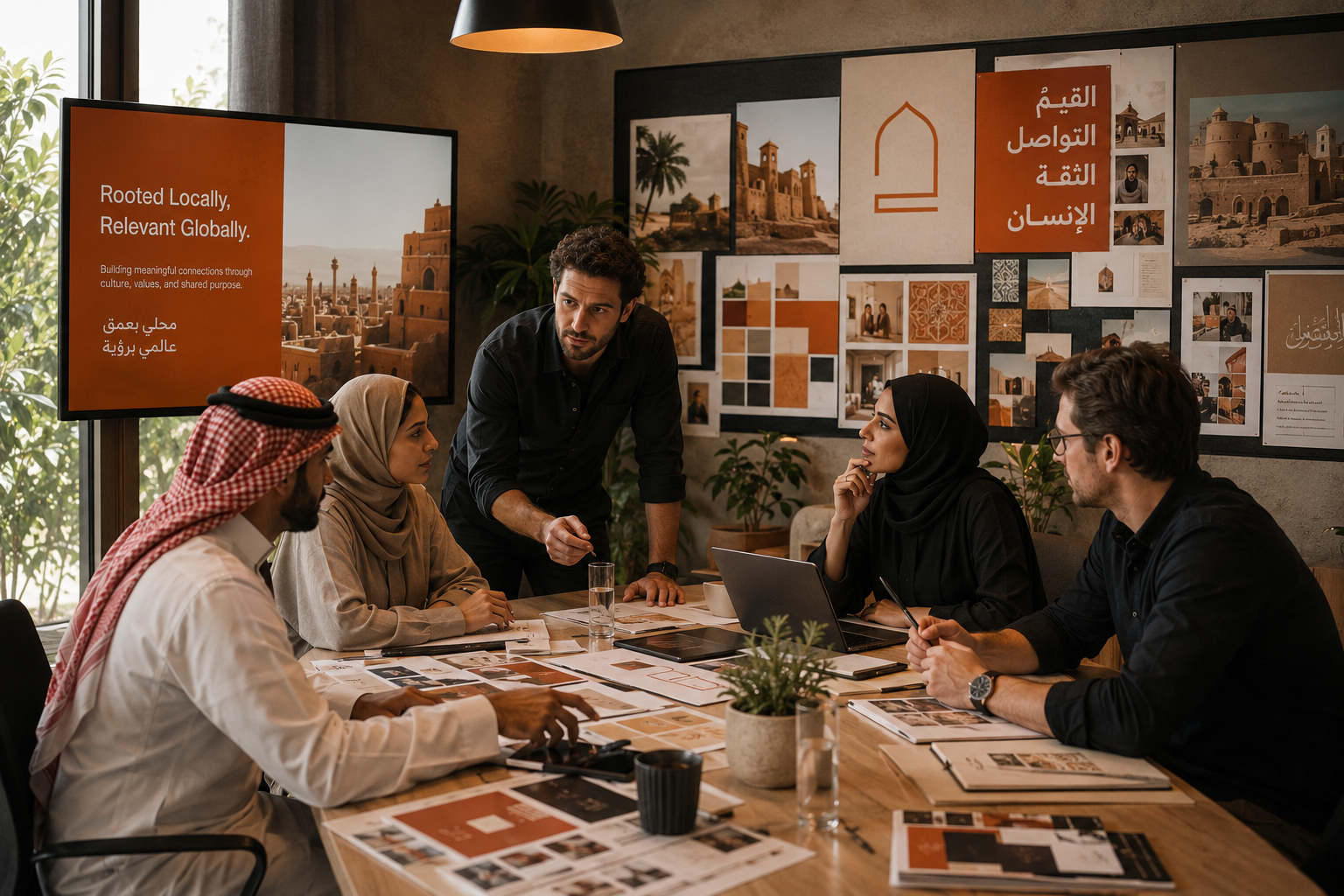
Agencies in the GCC need to stop treating localization as a translation exercise and start treating it as a strategic foundation.
This means advising clients to invest in local talent — not just for compliance or optics, but because local talent produces more trusted content and communication. It means building campaign strategies around long-term community partnerships, not just seasonal activations. And it means helping international clients understand that trust in the GCC — whether in Saudi Arabia, the UAE, Kuwait, or elsewhere — is earned through presence, respect, and continuity, not through a single well-placed media campaign.
For agencies, this is also a business opportunity. The clients who understand this shift will need strategic partners who can help them build genuine local roots. That is a higher-value service than media buying or content production — and it commands a higher fee.
4. Stop Ignoring the Income Trust Gap
What the data says:
One of the most striking findings in the 2026 Barometer is the growing gap in trust between high-income and low-income people. Globally, high-income people score 63 on the Trust Index while low-income people score 48 — a 15-point gap that has more than doubled since 2012. In the UAE, Saudi Arabia, and Nigeria, this gap ranges from 20 to 21 points.
This matters for marketers because a single campaign strategy will perform very differently depending on which income segment it reaches. High-income audiences in the GCC tend to have stronger institutional trust — they believe that businesses and governments are working in their interest. Lower-income audiences are more skeptical, more grievance-oriented, and harder to reach with conventional marketing messages.
What agencies need to change:
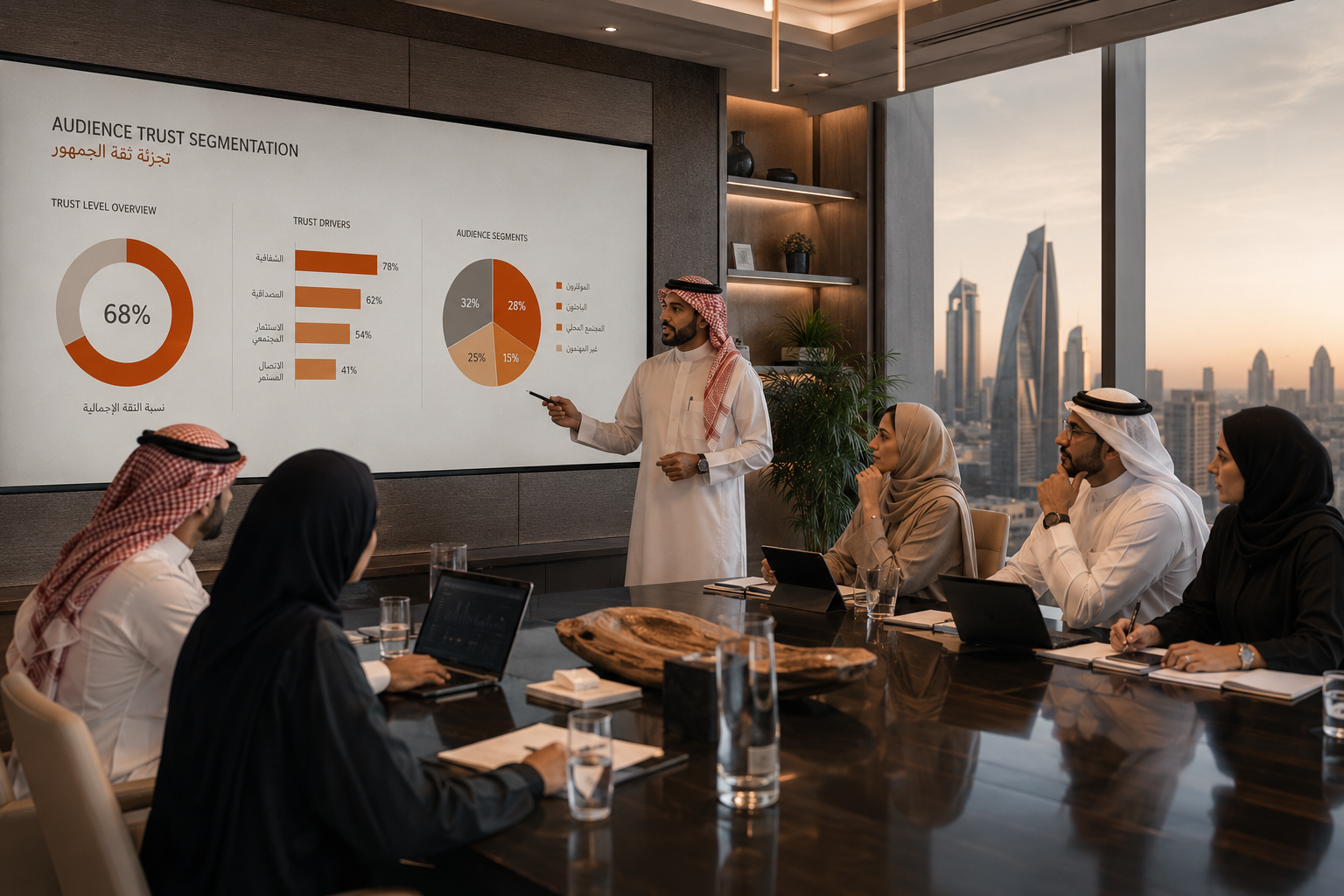
GCC agencies need to start segmenting their strategies not just by demographics but also by trust profiles. A campaign that works for high-income, high-trust consumers in Dubai will not automatically work for more skeptical audiences in different economic circumstances, even within the same country.
This means doing deeper audience research that includes trust attitudes, not just purchasing behaviour. It means creating separate messaging tracks for audiences with different levels of institutional trust. And it means helping clients understand that the way to reach lower-trust audiences is not to shout louder, but to demonstrate genuine value first.
The Barometer also shows that when institutions broker trust well — when they are seen as genuinely serving people rather than just selling to them — low-income audiences experience an 18-point trust boost. That is a significant commercial opportunity for brands willing to invest in authentic community service rather than surface-level marketing.
5. Build for Pessimism, Not Optimism
What the data says:
Globally, only 32% of people believe the next generation will be better off than the current one — a drop of 4 points in just one year. In many developed markets, this pessimism is deep and growing. Trade fears are at an all-time high, with 66% of employees worried about tariff conflicts hurting their company, and 67% worried about losing their job in a recession.
The GCC is a notable exception. Saudi Arabia recorded a 15-point increase in generational optimism — the highest of any country. The UAE also sits among the more optimistic markets. But agencies working across the region cannot ignore the global mood, especially when their clients are international brands, or when their GCC clients are communicating to audiences outside the region.
What agencies need to change:
This is perhaps the most nuanced shift of all. Marketing has traditionally been built on aspiration — the promise of something better. But in a world where most people do not believe things are getting better, pure aspiration can feel tone-deaf or even dishonest.
GCC agencies need to develop two distinct tonal registers. For regional GCC campaigns targeting local audiences — particularly in Saudi Arabia and the UAE — optimism, ambition, and vision remain powerful and authentic. These are markets where people genuinely believe in the future.
But for international campaigns, or for campaigns targeting more skeptical audiences, agencies need to learn the language of reassurance, stability, and genuine value. Not "this will change your life," but "this is something you can depend on." Not aspiration, but trust.
This is a real creative and strategic skill. Agencies that develop it will be significantly better equipped to serve clients across the full spectrum of global and regional markets.
The Bigger Picture: What Kind of Agency Do You Want to Be?
The 2026 Edelman Trust Barometer is not just a report about how consumers feel. It is a description of a world that is fundamentally reorganizing around trust — where it comes from, who holds it, and how it is earned.
For GCC agencies, this is both a challenge and a genuine opportunity. The region sits at a unique intersection: it has strong local community values that are now globally validated, high institutional trust that many markets have lost, and growing optimism that the rest of the world is struggling to find.
Agencies that read this moment correctly will stop selling campaigns and start building trust. They will move from reach to relationship, from celebrity to community, from broadcasting to belonging.
The clients who understand this shift are already looking for agency partners who can help them make it. The question is whether your agency is ready to be that partner.
The trust economy is here. It rewards those who show up genuinely, consistently, and with something real to offer.
That is a very different brief from the one most agencies are used to writing. But it might be the most important one of the decade.